AI Trends
The Future of Enterprise Automation Is Governed and Observable
Editorial note: this article was substantially revised on August 14, 2026 to replace generic material with current, source-linked implementation guidance.
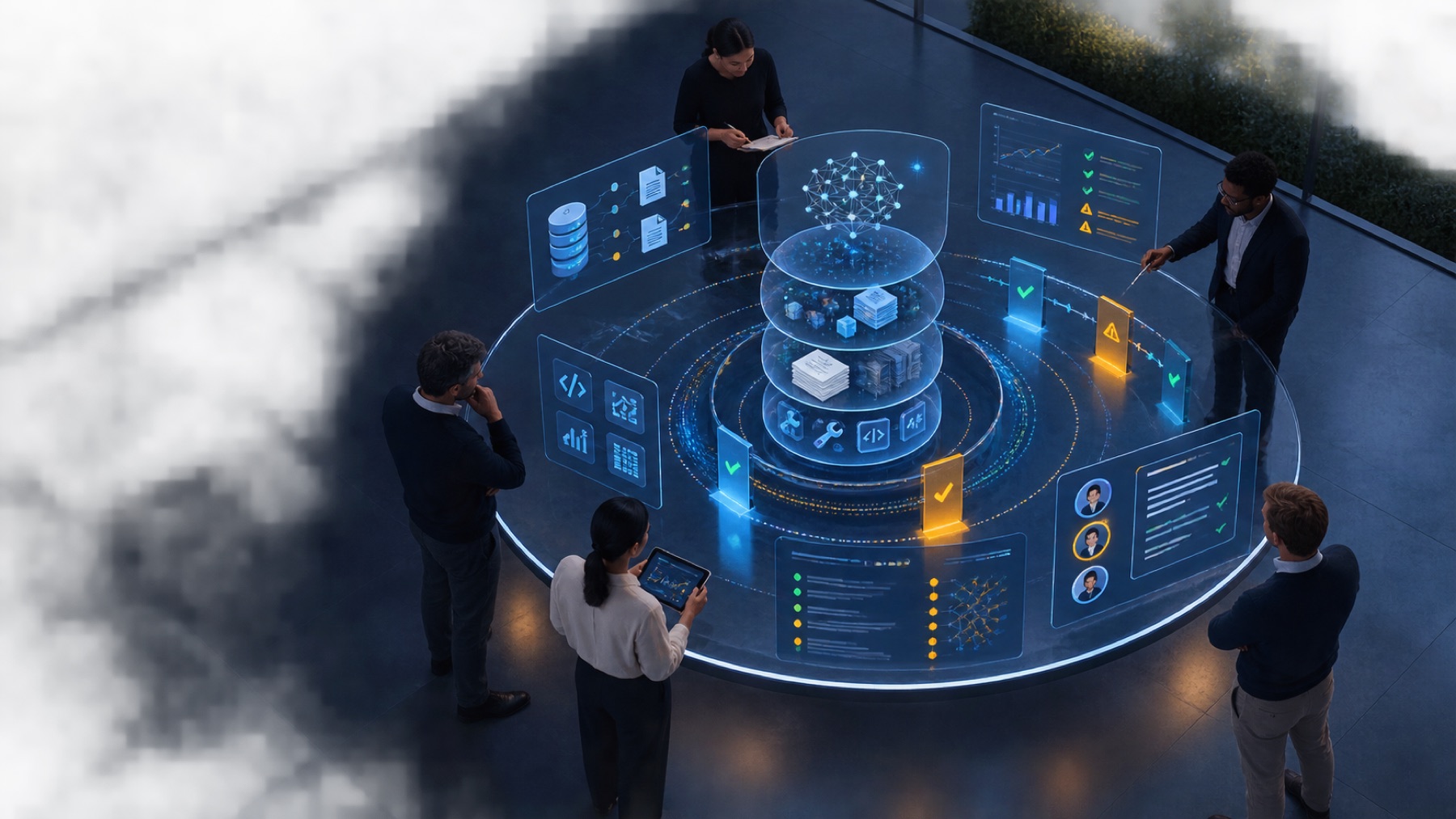
Enterprise automation is moving from isolated scripts to AI-enabled operating systems. The differentiator is not autonomy alone; it is governed integration, evidence, observability, and ownership.
At a glance
AI Trends · 7 min read
Published May 18, 2025 · revised August 14, 2026
What you’ll take away
- A practical framing for the problem
- Evaluation and delivery considerations
- A clear next step for your team
Automation is becoming a decision-and-action layer
Traditional automation follows a defined path. AI-enabled workflows can interpret unstructured inputs, retrieve evidence, choose tools, and propose or execute the next step. That expands the useful surface area, but it also makes the system harder to test and explain.
The durable architecture mixes deterministic and model-driven work
Use models for language, classification, extraction, and ambiguous reasoning. Use code and policy for authorization, calculations, validation, state transitions, and irreversible effects. The boundary should be visible in the architecture and the audit trail.
Observability must include quality
Infrastructure telemetry can show latency and errors, but an AI workflow also needs task, retrieval, tool, safety, and human-review signals. Traces should connect the user request, evidence, model call, tool action, approval, and final outcome without retaining unnecessary sensitive content.
- Version prompts, models, retrieval configuration, tools, and policy together.
- Gate releases on representative evaluations and critical failure thresholds.
- Monitor production samples and convert confirmed failures into regression tests.
- Assign owners for content, integrations, model quality, incidents, and change approval.
Managed operations is part of the product
Models change, APIs fail, permissions drift, knowledge goes stale, and business rules evolve. A production AI workflow needs an operating cadence for quality review, incident response, cost control, security, change management, and user feedback. Autonomy without that discipline is simply unowned risk.
Official references
Related field notes
AI Strategy
Agentic Consulting: A Practical Operating Model for AI-Native Delivery
The durable consulting model is not a consultant with a chatbot. It combines senior judgment, repeatable methods, specialized agents, approved client data, human governance, and measurable outcomes.
AI Evaluation
LLM Evaluation in Microsoft Foundry: Lessons from an Imaging Workflow
A practical evaluation pattern for an imaging-grounded AI workflow: separate extraction, retrieval, reasoning, tool use, and operational quality before treating a strong demo as a production system.
Need help applying this?
Turn the idea into a governed first workflow.
We can help scope the data, integrations, evaluation plan, and operating ownership behind the implementation.